

By
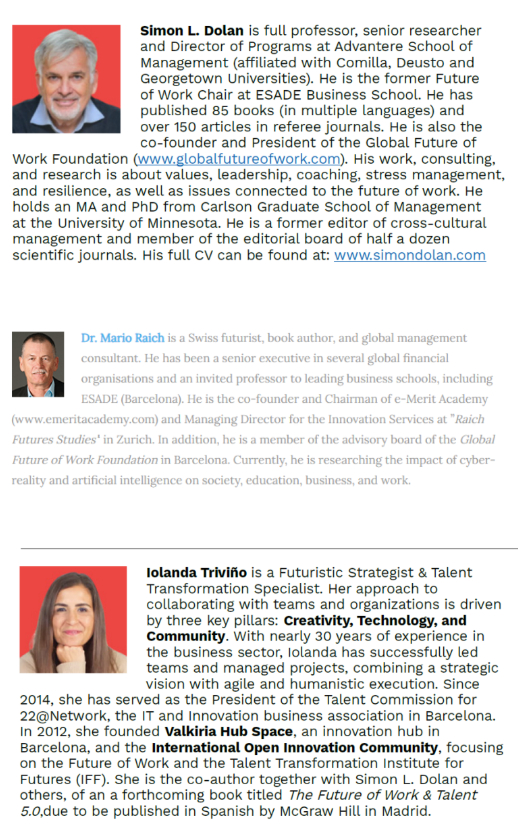
Simon L. Dolan, Mario Raich and Yolanda Triviño
Introduction
In a rapidly changing job landscape, embracing the future means adapting to new skills and opportunities. The title “Equipping for Tomorrow: Unlocking New Skills for the Future of Work in 2033” not only captures the essence of our message but also instills a sense of optimism and preparedness for what is to come.
We hope that this article will encourage you, the reader, to view the future as a realm of opportunities rather than challenges. It invites you to explore how you—and others in your organization—can proactively cultivate the skills necessary to thrive in an evolving workplace.
According to Fred Eichwald, in a recent German article, by 2030 an estimated 70 percent of job skills will have transformed. He emphasizes that essential soft skills—such as adaptability, empathy, conflict resolution, and resilience—will be paramount for future success in the workforce.
Adding to this insight, Simon L. Dolan, President and Co-Founder of the Global Future of Work Foundation, reveals that a study conducted jointly by the Foundation and the Institute for the Futures (at Valkiria) in Barcelona’s innovative 22@ digital district shows clearly that it is not always the largest companies that succeed, but rather those that are agile and innovative enough to revolutionize their industries.
The same study, coined “DDOT – Digital Dictionary of Occupational Titles,” revealed that the most successful professionals in the technology industry were not those who mastered the latest apps and technologies, but rather those governed by a wide range of soft skills.
Considering these findings, we must adapt our understanding of the skills and competencies required for tomorrow’s job market. Dolan highlights a crucial distinction between two types of skills: hard skills, which encompass essential technical knowledge and expertise, and soft skills, which are often more challenging for employers to identify and develop. These soft skills are emerging as key attributes for future employability.
This provides an encouraging message. While the job market is evolving, it also opens a wealth of opportunities for personal and professional growth. Embracing the development of both hard and soft skills will not only ensure relevance in the future workplace but also empower individuals to thrive in an ever-changing environment.
Some of the critical emerging skills include:
- The ability to search for information and create trusted networks. In a world oversaturated with data, finding what truly matters at the right moment is increasingly complex.
- Proficiency in multiple languages and digital skills. Globalization makes multilingual and technological competence essential.
- Creativity and cognitive flexibility: the ability to learn, unlearn, and relearn continuously.
- The capacity to negotiate and renegotiate, manage conflict as a learning source, handle stress, and promote well-being.
- Proactivity and passion for innovation.
Xavi Olba, consultant in digital strategy and innovation and member of the 22@ Community, highlights a fundamental future skill: professionals should not be mere holders of knowledge, but excellent managers of knowledge. He also emphasizes the importance of emotional intelligence and adds further core competencies:
- Authenticity: knowing oneself, being honest, and understanding personal values.
- Resilience: accepting that progress requires time and perseverance.
- Humility: recognizing strengths and limitations, being open to help, and learning continuously through practice.
- Attitude: maintaining constructive behavior, contributing actively, and knowing when to act and when to reflect.
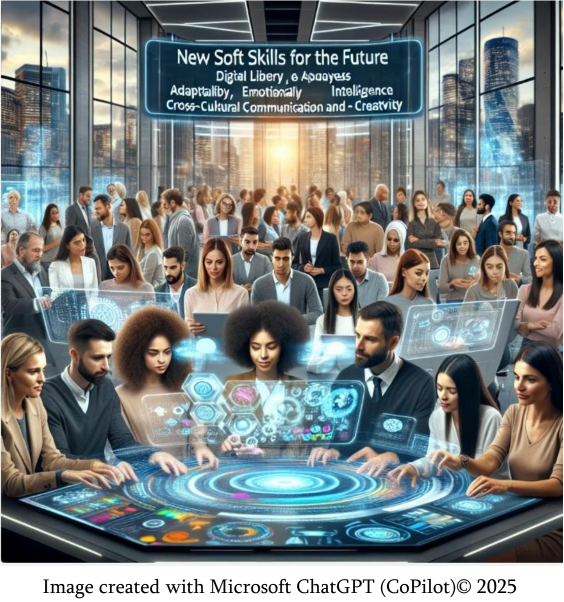
Soft Skills Are the New Hard Currency
What does this mean for you, your team, and your organization? Is there reason for optimism?
In today’s rapidly changing environment, technological advances, social shifts, and economic fluctuations are redefining the world of work at an unprecedented pace. What is relevant today may feel obsolete tomorrow. While this can feel overwhelming, it also brings extraordinary opportunities.
According to LinkedIn, 70 percent of the skills required for today’s jobs will change by 2030. This is not a speculative prediction—it is a present-day diagnosis. Yet reactions often range from denial to frantic certificate accumulation. What is missing is a systemic rethink across employees, managers, executives, policymakers, and academics in preparing for the future of work.
Artificial intelligence and automation should not be viewed merely as threats. They are powerful tools that can enhance productivity, eliminate repetitive tasks, and free people to focus on creativity, innovation, and problem-solving. This shift encourages upskilling and reskilling and empowers individuals at all organizational levels to become architects of their own careers.
Social changes are also reshaping expectations around work-life balance and employee well-being. Organizations that embrace inclusion, diversity, and collaboration will foster creativity and resilience, enabling innovative responses to modern challenges.
Economic crises, while stressful, can act as catalysts for reinvention. Companies that embrace agility and adaptability will not only survive uncertainty but emerge stronger.
There is no turning back—and that is a good thing. Adaptation is not merely survival; it is an opportunity to thrive. By fostering a growth mindset, organizations and individuals can innovate, evolve, and lead in this new era.
Talent Management in the New Landscape
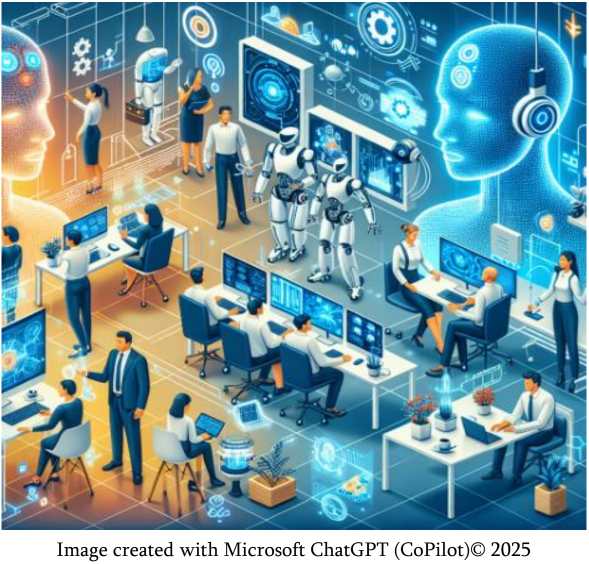
Technological advancements are transforming recruitment and human resources. Tools such as ChatGPT, automated recruitment systems, and generative AI models promise efficiency and data-driven decisions. Yet amid this progress, a critical aspect risks being overlooked: the social, communicative, and psychological development of professionals.
Emotional intelligence, empathy, active listening, conflict resolution, and cultural awareness remain timeless foundations of effective teamwork. If technological adoption outpaces the cultivation of these human skills, organizations risk creating a dangerous imbalance.
Companies must therefore invest simultaneously in advanced technology and human development. Training programs focused on interpersonal skills, mentorship, and collaborative learning can help bridge this gap, creating a balanced ecosystem where AI complements—not replaces—human connection.
Organizations that prioritize holistic development gain a competitive advantage, attracting and retaining talent that values meaningful growth and purpose.
Adaptability and the Need for a New Educational System
Adaptability is often misunderstood as simple flexibility. True adaptability requires questioning established patterns, rethinking roles, and using crises productively. This level of inner flexibility is particularly challenging for leaders trained to prioritize control and rapid decision-making over self-reflection.
Yet this is precisely what is required today. Leaders who cannot change themselves will be unable to lead others through change.
Current education systems tend to emphasize specialized hard skills that are measurable and exam-based, often neglecting essential soft skills. As a result, students may excel academically while struggling with communication, empathy, and real-world problem-solving.
The good news is that change is underway. Project-based learning, teamwork, internships, and mentorship programs are fostering more integrated skill development. A holistic educational approach—valuing both hard and soft skills—is essential for preparing future professionals.
Conclusions: What Is Really Needed Now
The soft skills discussed in this article are important indicators—but they are not enough. What is truly required is an honest examination of the blind spots in our work culture:
- Leadership must be redefined as service to others’ development.
- Education must shift from exam-centric models to lifelong learning and metacognitive skills.
- Organizations must create real conditions for growth through time, trust, and support.
- Employees must recognize that true job security lies not in a single role, but in continuous self-development.
By embracing this mindset, we can build a resilient, adaptable workforce prepared for the challenges of tomorrow. The future of work belongs to those who are willing to grow—both technically and humanly.
Authors